Table of Contents
The world of search has changed dramatically.
A few years ago, businesses only focused on SEO (Search Engine Optimization) to rank on Google. Today, users search through Google, ChatGPT, Gemini, Perplexity, voice assistants, AI agents, and mobile search platforms.
This means businesses must optimize not only for search engines but also for answer engines, generative AI systems, user experience, and future AI memory systems.
Modern digital visibility in 2026 revolves around five major pillars:
- SEO – Search Engine Optimization
- AEO – Answer Engine Optimization
- GEO – Generative Engine Optimization
- AIO – AI Optimization
- SXO – Search Experience Optimization
Let’s understand each one in simple language with practical and technical insights.
1. SEO – Search Engine Optimization
What is SEO?
SEO is the process of helping search engines understand your website so it appears higher in search results when users search for relevant keywords.
Example:
If someone searches:
“Best digital marketing agency in Ahmedabad”
Google should be able to understand that your website offers those services and deserves to appear on the first page.
Key Components of SEO
A. High-Intent Keyword Clusters
Earlier, businesses targeted single keywords.
Example:
- Website Development
- SEO Services
- Digital Marketing
Modern SEO focuses on keyword clusters.
Example:
Instead of targeting:
“Website Development”
You create content around:
- Website Development Company
- Ecommerce Website Development
- WordPress Website Design
- Website Cost in India
- Website Development Process
- Website Maintenance
This creates topical authority.
Why It Matters
Google now rewards websites that demonstrate expertise across an entire topic rather than a single keyword.
B. On-Page SEO
This involves optimizing individual pages.
Key elements:
- Page Titles
- Meta Descriptions
- Header Tags (H1, H2, H3)
- Internal Links
- Image Alt Tags
- Structured Content
Example:
A page titled:
“SEO Services”
is weaker than
“SEO Services in Ahmedabad | Improve Rankings & Leads”
because it is more specific.
C. Technical SEO
Think of this as the website’s foundation.
Search engines need to:
- Discover pages
- Understand pages
- Index pages
Technical SEO includes:
- XML Sitemaps
- Robots.txt
- Canonical URLs
- HTTPS Security
- Mobile Responsiveness
- Structured Data
D. Backlinks and Domain Authority
Backlinks are recommendations from other websites.
When reputable websites link to your content, search engines view your site as trustworthy.
Quality matters more than quantity.
One backlink from a respected publication may be worth more than 100 low-quality links.
E. Site Speed & Crawlability
Google wants fast websites.
Key metrics include:
- Largest Contentful Paint (LCP)
- Interaction to Next Paint (INP)
- Cumulative Layout Shift (CLS)
Ideal load time:
Under 3 seconds.
F. Content Refresh
Many businesses publish content and forget it.
Search engines prefer updated content.
A quarterly review should include:
- Updated statistics
- New examples
- Additional FAQs
- Fresh screenshots
- Updated links
2. AEO – Answer Engine Optimization
What is AEO?
Answer Engine Optimization focuses on helping platforms directly answer user questions.
Examples:
- Google Featured Snippets
- Google AI Overviews
- Siri
- Alexa
- Voice Search
- Chat-based Search
Instead of showing links, these systems provide answers.
How AEO Works
A. Concise Answers
Answer engines prefer direct answers.
Ideal format:
40–60 words.
Example:
Question:
“What is GST?”
Good Answer:
“GST (Goods and Services Tax) is an indirect tax applied to the supply of goods and services in India. It replaced multiple indirect taxes and follows a destination-based taxation model.”
B. FAQ Schema
Schema markup helps machines understand content.
Example:
FAQ Schema
How does GST work?
What is GST registration?
Who needs GST registration?
This increases the chance of appearing in:
- AI Overviews
- Featured Snippets
- Voice Search
C. How-To Schema
For instructional content:
- How to register a company
- How to apply for GST
- How to publish a book
Structured steps help answer engines extract content.
D. “People Also Ask” Coverage
Google reveals related questions.
Example:
If your article is about SEO:
You should also answer:
- What is SEO?
- How long does SEO take?
- Is SEO worth it?
- How much does SEO cost?
This improves visibility dramatically.
E. Voice Search Optimization
Voice queries are conversational.
Typed query:
“GST registration”
Voice query:
“How do I register my business for GST in India?”
Content should reflect natural human language.
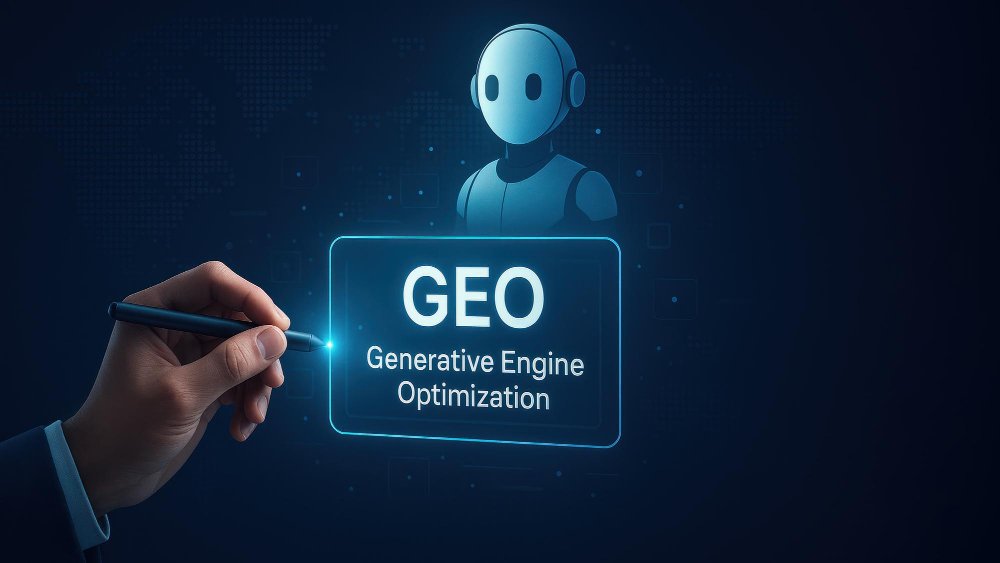
3. GEO – Generative Engine Optimization
What is GEO?
Generative Engine Optimization focuses on being cited and referenced by AI systems.
Examples:
- ChatGPT
- Perplexity
- Gemini
- Claude
- Copilot
Instead of showing ten blue links, these systems generate answers from trusted sources.
Your goal is to become one of those trusted sources.
GEO Strategies
A. Create Entity-Rich Content
AI models understand entities better than keywords.
Entities include:
- Companies
- Products
- People
- Locations
- Concepts
Example:
Rather than:
“We provide consulting.”
Write:
“Vision Raval provides business consulting, digital transformation, process optimization, and AI implementation services in Ahmedabad, Gujarat.”
This gives AI clear context.
B. Demonstrate E-E-A-T
Google and AI systems evaluate:
- Experience
- Expertise
- Authoritativeness
- Trustworthiness
Ways to improve:
- Author profiles
- Case studies
- Certifications
- Awards
- Real client stories
C. Mentioned Across the Web
AI trusts information repeated across multiple sources.
Examples:
- News websites
- Business directories
- Industry publications
- Podcasts
- Interviews
- Forums
Consistent mentions build authority.
D. Structured Content
AI systems love structure.
Use:
- Headings
- Bullet Points
- Tables
- FAQs
- Definitions
Poorly organized content is harder for AI to extract.
E. Data-Driven Content
Content supported by:
- Research
- Statistics
- Original studies
- Industry reports
gets referenced more frequently by AI systems.

4. AIO – AI Optimization
What is AIO?
AIO focuses on making your brand recognizable and memorable to AI systems over time.
Think of it as:
“Building a digital footprint that AI can confidently understand.”
Core Elements of AIO
A. Presence in AI Training Data
AI models learn from public information.
The more credible information available about your business, the easier it becomes for AI systems to recognize it.
Sources include:
- Blogs
- News Publications
- Industry Reports
- Research Papers
- Public Websites
B. Wikipedia & Wikidata Presence
Large AI models heavily rely on structured knowledge sources.
If a brand is notable enough:
- Wikipedia
- Wikidata
- Knowledge Graphs
- can strengthen recognition.
C. GitHub Footprint
For technology companies:
- Open-source projects
- Documentation
- Public repositories
help establish technical credibility.
D. Consistent Brand Messaging
Your business description should remain consistent everywhere.
Example:
If one website says:
“Vision Incorp is a consulting firm”
and another says:
“Vision Incorp is a software company”
AI may become confused.
Consistency strengthens brand understanding.
E. Credible Source Mentions
AI trusts:
- News websites
- Government websites
- Academic publications
- Industry associations
more than random blogs.
Quality matters significantly.
F. Long-Term Model Recall
Brands repeatedly mentioned online gain stronger recognition over time.
This is not achieved overnight.
It requires:
- Continuous publishing
- PR activities
- Thought leadership
- Industry participation
5. SXO – Search Experience Optimization
What is SXO?
Getting traffic is no longer enough.
Visitors must also convert.
SXO combines:
SEO + UX + CRO
(Search Engine Optimization + User Experience + Conversion Rate Optimization)
Components of SXO
A. Mobile-First Design
Over 70% of searches occur on mobile devices.
A website should:
- Load quickly
- Display properly
- Be easy to navigate
on smaller screens.
B. Match Search Intent
Every visitor has a goal.
Examples:
Informational Intent:
“What is SEO?”
Commercial Intent:
“Best SEO Agency in Ahmedabad”
Transactional Intent:
“Hire SEO Consultant”
Your content must align with the user’s intent.
C. Clear Calls-to-Action
Visitors should know the next step.
Examples:
- Book Consultation
- Request Quote
- Download Brochure
- Call Now
Confusing websites lose potential customers.
D. Continuous CRO Testing
Conversion Rate Optimization involves testing:
- Headlines
- Forms
- Landing Pages
- Buttons
- Layouts
Small improvements can significantly increase conversions.
E. Frictionless User Journey
Users should move smoothly from:
Search → Website → Trust → Inquiry → Purchase
Any friction reduces conversions.
Common friction points:
- Slow pages
- Too many form fields
- Poor navigation
- Missing trust signals
The Future: Search Is Becoming an Ecosystem
The biggest mistake businesses make in 2026 is focusing only on traditional SEO.
Modern visibility requires:
| Area | Goal |
|---|---|
| SEO | Rank in search engines |
| AEO | Become the direct answer |
| GEO | Get cited by AI systems |
| AIO | Build AI-recognizable authority |
| SXO | Convert visitors into customers |
Businesses that master all five layers will dominate digital discovery across Google, ChatGPT, Gemini, Perplexity, voice assistants, and future AI-powered platforms.
The winners of 2026 will not be the companies with the biggest advertising budgets. They will be the companies that build the most trustworthy, structured, discoverable, and user-friendly digital presence.
Modern SEO is no longer about ranking pages. It is about becoming the most trusted answer—everywhere people search.